The defining question for any AV monitoring software purchase is brutally simple: can it see the projector with no cloud account? In a typical estate, most equipment (projection, displays, amplifiers, switchers, DSPs, legacy control processors) has no vendor cloud and never will. Software that only integrates with clouds is monitoring the minority and calling it coverage.
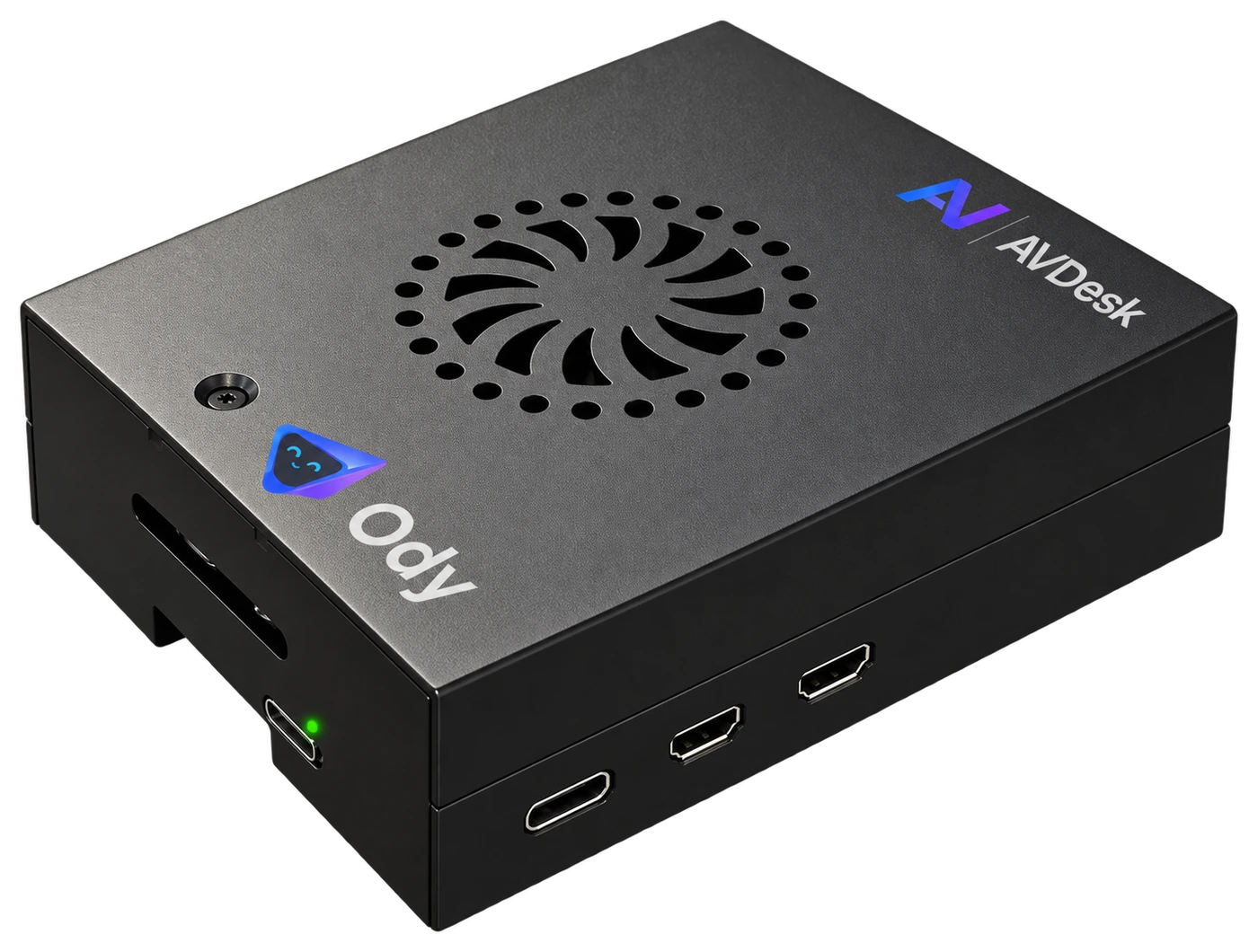
AVDesk approaches it from the LAN up. An accredited integrator commissions Ody, our on-site AV monitoring box, at each site. Ody finds the AV equipment on the local network and polls it continuously in the languages the gear already speaks: PJLink for projection, Q-SYS QRC, Crestron, AMX NetLinx, ONVIF for cameras, and SSH, SNMP and HTTP APIs for the rest. Then it dials home over an outbound-only encrypted tunnel. Nothing is installed on devices; no inbound firewall ports open. Above that, the vendor clouds you already use (Microsoft Teams Rooms, Cisco Webex Control Hub, Zoom Rooms, Crestron XiO Cloud, Q-SYS Reflect, Logitech Sync, Poly Lens) federate in via SSO, so cloud-managed and on-prem kit share one screen.
Detection is half the job; the other half is what happens next. Alerts can raise tickets in the support desk under your SLA clocks, remote control closes most faults from a desk (power, preset, reboot, every command audited), and history accrues on the asset record so repeat offenders surface with evidence. For the deeper feature walkthrough see AV monitoring & control; for a structured way to evaluate the market, our guide to the best AV monitoring software for enterprise.