
- Enterprise AV monitoring stands or falls on coverage: an on-site component must see the majority of gear that has no vendor cloud.
- Score platforms on six criteria: coverage, protocols, security model, remote control, workflow integration and reporting.
- Outbound-only tunnels and audited commands are non-negotiable for enterprise security review.
- The best platform is the one that turns alerts into tickets and history. Monitoring bolted to nothing is a dashboard, not a system.
Search for "best AV monitoring software" and you'll find a dozen dashboards that all look the same in a screenshot: green tiles, red tiles, a graph. The differences that matter to an enterprise (what the platform can actually see, what your security team will sign off, what happens after the alert) don't show up in screenshots. They show up six months in.
Here is the evaluation framework we'd use for any enterprise AV monitoring purchase, including our own.
Criterion 1 Coverage: can it see gear with no cloud?
This is the sorting question, because it splits the market in two. Cloud-only monitoring tools can see devices that have a vendor cloud account, and in a typical enterprise AV estate, that is the minority. The projectors, amplifiers, switchers, DSPs and legacy control processors that make up the bulk of the racks have no cloud and never will.
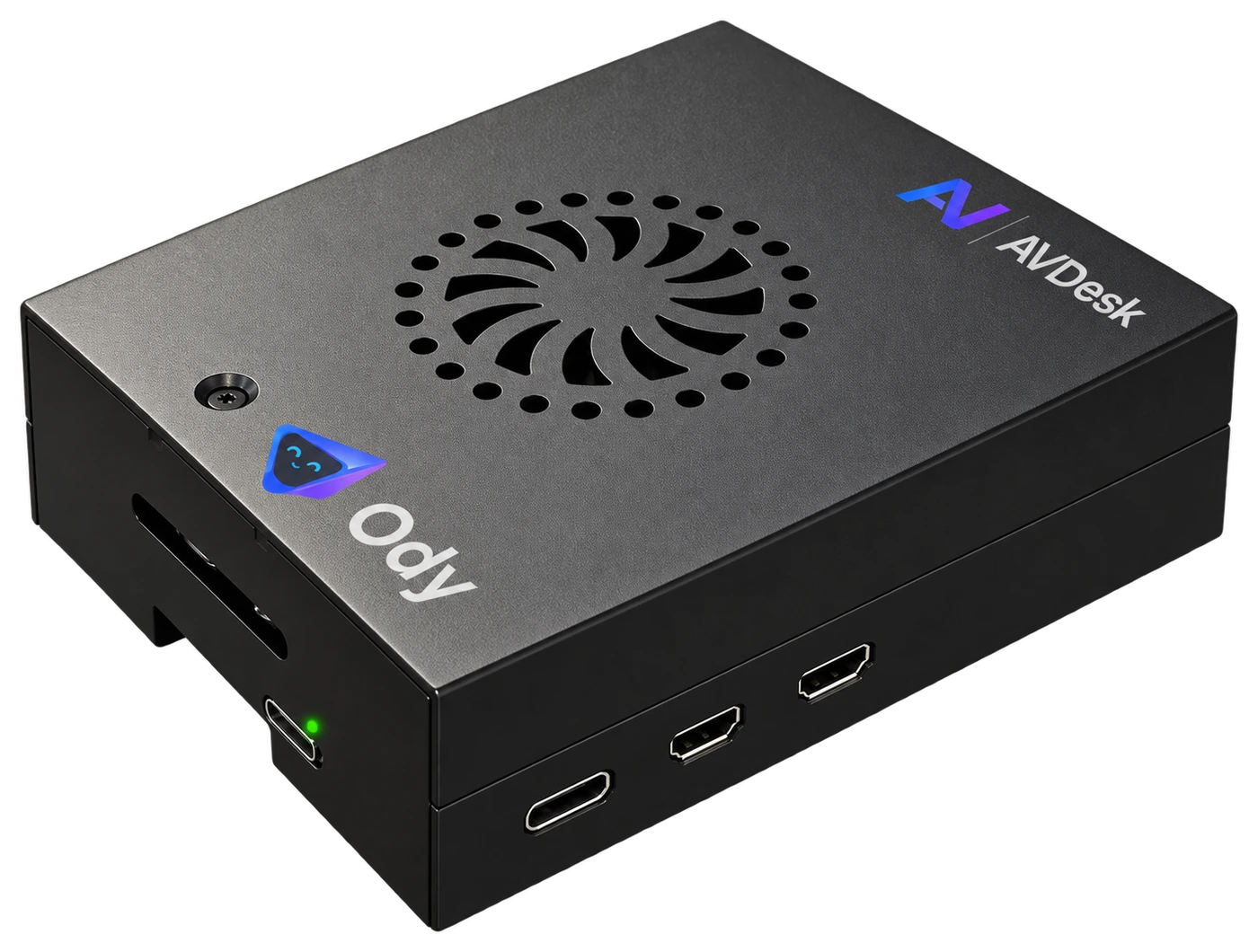
Enterprise-grade coverage requires an on-site monitoring box: a small device on the AV network that finds the AV equipment, polls it continuously and reports back. In AVDesk this is Ody, installed and commissioned by an accredited integrator at each site. If a platform has no on-site story, most of your estate is invisible to it. End of evaluation.
For the mechanics of reaching equipment remotely (protocols, the on-site box and what to check on each device), see how to monitor AV devices remotely.
Criterion 2 Protocols: brand-agnostic or brand-captive?
Enterprise estates are mixed by nature: merged offices, different integrators, a decade of procurement. The platform must speak the protocols the estate already speaks: PJLink for projection, Q-SYS QRC, Crestron, AMX NetLinx, ONVIF for cameras, plus SSH, SNMP and HTTP APIs for everything else. Ask for the protocol list in writing, and test it against your three most awkward rooms. We've written a full walkthrough of monitoring Q-SYS, Crestron and third-party devices from one platform.
Criterion 3 Security model: what will your CISO say?
Enterprise AV monitoring fails procurement on security more often than on features. The answers that pass review:
- Outbound-only connectivity. The on-site box dials home over an encrypted tunnel; no inbound firewall ports, no VPN sprawl, no device exposed to the internet.
- Nothing installed on devices. Monitoring speaks to equipment over its existing control protocols.
- Every remote command recorded. When someone reboots a boardroom DSP, the audit trail answers who, what and when.
- Data residency. For Australian enterprises, AU-hosted data cuts latency and shortens the procurement questionnaire, which is one of the reasons we built an Australian AV management platform in the first place.
Criterion 4 Remote control: alerts must become fixes
Monitoring that can only watch simply moves the dread earlier in the day. The enterprise value is in acting from the alert: power a device, mute it, recall a preset or hard-reboot the frozen processor, from any desk, through the same tunnel. In multi-site estates, remote-first fixing is the difference between a two-minute action and a day of travel.
Criterion 5 Workflow: what happens after the alert?
An alert that lands in an inbox is a coin-flip. Enterprise monitoring should raise, reopen and close tickets in a real support desk, with SLA response and resolution clocks, and accrue history against the asset record, so recurring offenders surface with evidence. Monitoring, assets and support as one platform is the whole thesis behind AV management software as a category; three separate tools taped together is how things fall between them.
Criterion 6 Reporting: numbers leadership will read
Uptime by site and room, estate health scores, SLA performance trends. If the platform can't hand your AV manager a report that survives a leadership meeting, the value stays trapped in the ops team.
24/7 monitoring and proactive alerting
Most shortlists carry a line item for "24/7 monitoring". Split it into two questions, because they have different answers. First, does the platform watch around the clock? It should: checks run continuously, overnight faults are captured with a timestamp, and wakeup checks verify critical rooms before the day starts. Second, who responds at 2am? That's a service question rather than a software one: it depends on your own roster, your integrator's service agreement or a managed service.
Proactive alerting means the platform raises the issue before a user does and routes it somewhere it will be worked: a ticket against the right asset, with an SLA clock and an owner. Alerts that only light up a dashboard aren't proactive; they're decorative. If you're weighing a monitoring service rather than software alone, see how managed AV services work, and put the security questions in this checklist to every vendor on the list.
Scoring the market
| Criterion | Cloud-only tools | Vendor clouds (XiO, Reflect…) | AVDesk |
|---|---|---|---|
| Monitors AV gear with no cloud | No | Own brand only | Yes, Ody on the LAN |
| Brand-agnostic protocols | Limited | No | PJLink, QRC, Crestron, AMX, ONVIF, SSH, SNMP, HTTP |
| Inbound ports required | Varies | No | No, outbound-only tunnel |
| Audited remote control | Rare | Own brand only | Yes, every command logged |
| Tickets, SLA, asset history | Separate tools | No | Built in, one platform |
| AU-hosted, AU team | Rarely | No | Yes, Sydney |
Vendor clouds aren't competitors to remove. They're sources to federate. The deeper comparison is in AVDesk vs vendor-specific cloud monitoring.
The shortlist test
Whatever platforms make your shortlist, run the same trial: pick one real site, including the awkward rooms, and measure four weeks of (1) AV devices monitored vs AV devices owned, (2) faults detected before users reported them, (3) faults fixed without a site visit, and (4) the report you'd forward to leadership. Those four numbers are the evaluation. Everything else is demo lighting.
AVDesk AV Management Software is happy to be measured that way: book a demo on your own estate, priced per room and quoted for your sites.