
- AV monitoring software continuously checks every AV device's health and raises alerts before users hit the fault.
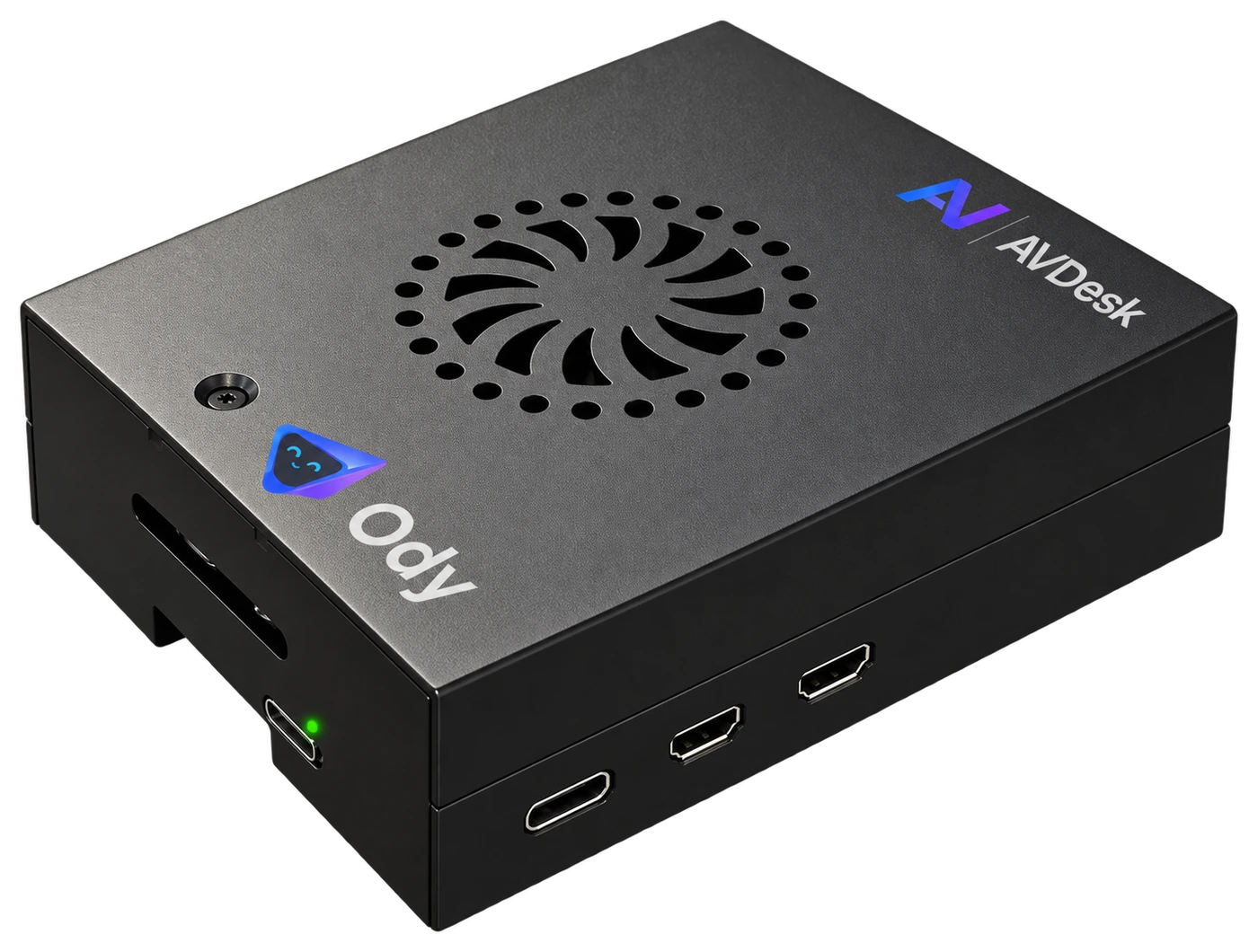
- Estates need both halves: an on-site box (Ody) that reaches AV gear with no cloud, plus vendor clouds federated in via SSO.
- Monitoring without remote control only moves the dread earlier. Power, preset and reboot actions close most faults from a desk.
- The payoff compounds when alerts flow into a support desk and history accrues against each asset.
Every AV manager knows the phone call: a meeting has started, the projector won't wake, and someone important is standing at the lectern. The fault probably began hours earlier. The device dropped off the network overnight, or a switch port died on the weekend, but nobody knew until the room filled up.
AV monitoring is the fix. It is software that continuously checks the health of the audio visual equipment across your sites (projectors, displays, DSPs, cameras, control processors, switchers) and raises an alert the moment something goes wrong, ideally with enough remote control to fix it without a site visit.
How AV monitoring actually works
Modern AV monitoring has two halves, and estates of any size usually need both:
- On-site monitoring. A small box sits on the AV network at each site, finds the AV devices on the site network and polls them continuously. Because it lives on the same network as the gear, it can reach equipment that has no cloud service at all, which in most estates is the majority of it. In AVDesk this box is called Ody; it is installed and commissioned by an accredited integrator and connects back to the cloud over an outbound-only encrypted tunnel, so no firewall ports are opened and nothing is exposed to the internet.
- Vendor clouds via SSO. Platforms such as Microsoft Teams Rooms, Cisco Webex Control Hub, Zoom Rooms, Crestron XiO Cloud, Q-SYS Reflect, Logitech Sync and Poly Lens already know a great deal about their own devices. Rather than replacing them, good monitoring federates them in through single sign-on so cloud-managed and on-premises equipment sit side by side in one view.
The result is a single pane: every device, grouped by site and room, with live status at a glance.
For the step-by-step version (the three ways to connect, what to check on each device and a four-week rollout), see remote AV monitoring: how to monitor AV devices remotely.
What gets monitored
The useful checks go well beyond "is it pinging":
- Reachability and health: the device is on the network, responding on its control protocol, and reporting a healthy state.
- Lamp, temperature and error states: projectors and displays report their own warnings over PJLink and vendor protocols long before they fail outright.
- Network infrastructure: switch uplinks and PoE budgets, because a surprising share of "AV faults" are actually network faults.
- Wakeup checks: teaching spaces and boardrooms that must work at 8am get verified before anyone arrives.
Monitoring without control is only half the job
An alert that still requires a truck roll saves you embarrassment, not labour. The second half is remote control: from the same screen that raised the alert you should be able to power a device, mute it, recall a preset or hard-reboot it. Over protocols like PJLink, Q-SYS QRC, Crestron, AMX NetLinx, SSH and SNMP, most day-one faults (the frozen touch panel, the display stuck on the wrong input) are fixable from a desk in minutes.
The measure of a monitoring platform isn't how many alerts it raises. It's how many faults get fixed before anyone in the building notices there was one.
Every remote command should also be recorded, so there is always an answer to "who did what, when".
From alerts to accountability
Once monitoring is in place, the data compounds. Uptime and estate health reports give AV managers something concrete to hand to leadership; recurring alerts identify the room that needs a rebuild rather than another band-aid; and when alerts flow straight into a support desk as tickets, nothing gets lost between "the system noticed" and "someone fixed it".
What to look for in an AV monitoring platform
- On-site discovery, not just cloud integrations; otherwise most of your estate is invisible.
- Brand-agnostic protocol support: one platform across Q-SYS, Crestron, AMX, Extron and everything else in the racks.
- Outbound-only security: no inbound firewall ports, no exposed device credentials, no VPN sprawl.
- Remote control with an audit trail, so alerts become fixes and fixes are accountable.
- Ties into assets and tickets: monitoring is far more useful when the alerting device is also a record in your asset register with a service history.
AVDesk was built in Australia around exactly this model: Ody on site, vendor clouds federated in, alerts, remote control and reporting in one place, priced per room and quoted for your estate. If you'd like to see it running against real rooms, book a demo.