
- Schools have more rooms than any office and less time to fix them; the bell doesn't wait for a technician.
- Wakeup checks before period one and remote fixes from the office turn the black-screen panel into a ticket that closes itself.
- Teachers report faults by scanning a QR code on the classroom wall; no logins, no forms, no chasing the IT office.
- Test & Tag due dates, lamp hours, warranties and a refresh forecast by financial year live on the same register the business manager reads.
The classroom is a room too
Corporate AV thinks in boardrooms. Schools think in classrooms: forty, eighty, two hundred of them, each with an interactive panel or a projector and a screen, a pair of speakers, sometimes a document camera and a lectern. Then the halls, the theatre, the chapel, the gym with its public address, the library, the staff room, the boardroom. A TAFE campus adds workshops and lecture theatres, and a multi-campus college adds distance.
The IT team looks after the panels because nobody else will, in between everything else they do. The result is predictable: nobody knows which rooms have which panels, the lamp in the theatre projector goes with no warning, the annual Test & Tag round is a clipboard exercise, and when the business manager asks what the AV fleet is worth for the insurance renewal, the answer is a guess.
The bell doesn't wait
A meeting can start five minutes late. A period can't. The fault that matters in a school is the one at 8:45 with a class filing in, so the platform has to find and fix faults before that moment:
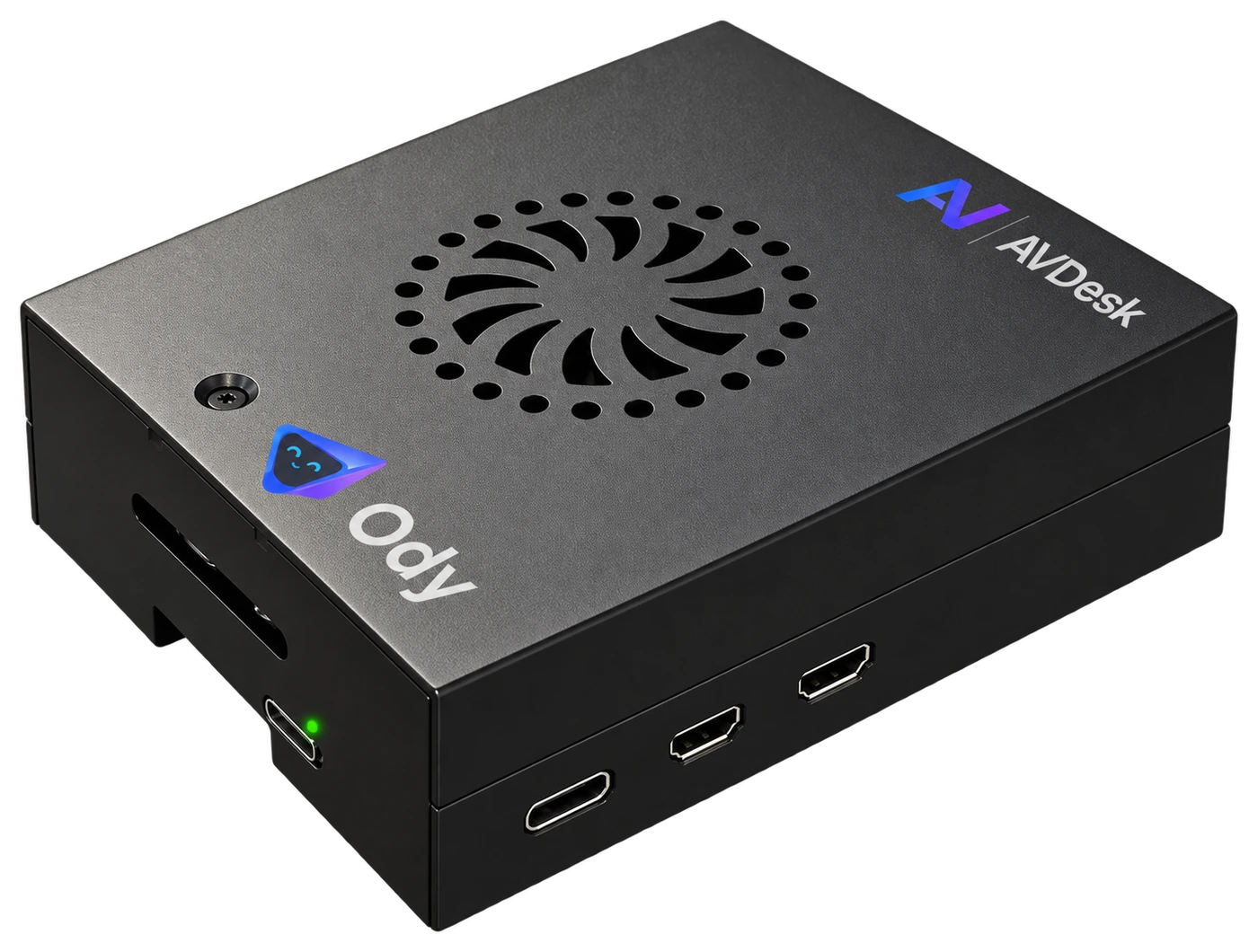
- Wakeup checks before period one. The on-site Ody box verifies the rooms you nominate, the theatre, the halls, the rooms with a first-period exam, before the school day starts, and raises a ticket for anything that doesn't respond.
- Remote fixes from the office. Most classroom faults are a panel that needs a power cycle, a projector on the wrong input or a processor that's locked up. Ody issues power, input and reboot commands over the device's own control protocol, from the IT office, with every command logged.
- Teacher reporting in five seconds. A QR code on the wall of every classroom opens a fault form for that room. The teacher scans it, types "panel has lines down the screen", and gets back to the class. The ticket lands in the support desk with the room and the panel attached.
Lamp hours, filters and the term-break window
Projectors announce their failures well in advance: lamp hours climbing, filter warnings, temperature errors. Ody reads these over PJLink and vendor protocols and surfaces them before the lamp dies mid-lesson. Better still, schools have something offices don't: scheduled quiet time. Maintenance schedules in AVDesk are attached to rooms and generate real tickets, so the theatre's lamp change, the hall's filter clean and the panels' firmware round are all due in the term break, assigned to a technician or a contractor, with a checklist and photos of the work. See how maintenance works are scheduled and closed.
Test & Tag without the clipboard
Portable AV equipment in a school needs electrical testing and tagging on a schedule, and the records need to exist when someone asks. AVDesk holds Test & Tag results and next-due dates against each asset, so the register shows what's due this term and the technician records the result by scanning the asset's QR label. Compliance stops being a separate spreadsheet that's right once a year.
The register the business manager reads
The AVDesk register holds the operational record and the financial one on the same asset:
| Question | Answered by |
|---|---|
| What panels are in which rooms, and are they all the same model? | Room-level location and a shared model catalogue, so standardisation is measurable rather than assumed. |
| What is the AV fleet worth for insurance? | Purchase cost, straight-line depreciation and written-down value on every asset, rolled up per campus. |
| Which panels are still under warranty? | Warranty expiry on the record, with a heads-up before it lapses, so repairs are claimed rather than paid for. |
| What needs replacing next financial year? | End-of-sale and end-of-support dates on the model, driving a refresh forecast bucketed by financial year. |
| Where did the document camera from room 22 go? | QR scan-and-move updates and an audit trail on every change. |
Per-room pricing helps here: a school licenses rooms, not devices, so every speaker, lectern and document camera goes in the register at no extra cost. Complete registers are what make the refresh forecast believable.
Multi-campus schools and TAFE
Colleges with several campuses and TAFE institutes with many get one platform: an Ody per campus, one register structured by campus, building, level and room, and permissions scoped so a campus technician works their campus while the central team sees the whole estate. The support desk runs one queue with SLA clocks across all of it, and reporting rolls up per campus. Institutions without enough AV staff to cover every campus can hand the monitoring and ticket work to AVDesk Managed Support.
The panel in room 14 gets found by the platform at 7am, fixed from the IT office, recorded against the asset and counted in the refresh forecast. The teacher never knew.
Where schools start
Usually with the rooms that hurt most: the theatre, the halls and one block of classrooms. An Ody on the campus network, the existing equipment list imported, QR codes on classroom walls, and wakeup checks on the rooms with a hard start. The rest of the school follows block by block. Book a demo and bring your room list.