
- There are two kinds of maintenance work: preventative schedules and ad-hoc jobs. Both need to produce real tickets, or they lose every priority contest.
- Attach the schedule to the room and let its live asset list generate the checklist, so the visit covers what's installed today.
- Assign a crew, not a name: maintenance jobs carry several assignees, a technical or administrative type, photos and a calendar.
- Close the job against the asset. That history is what repair-or-replace and refresh forecasting run on.
Two kinds of maintenance work
Preventative schedules are the recurring visits: the quarterly theatre service, the annual hall inspection, the microphone-fleet battery round. Ad-hoc works are everything else: the lamp swap the ticket needs, the rack re-termination after the fit-out, the firmware campaign across forty panels, the contractor's visit to replace a failed amplifier. Most tools handle one or neither. Both need the same treatment: a job with a room or an asset, people, a date, evidence, and a close-out that lands on the equipment's record.
Attach the schedule to the room
In AVDesk a preventative schedule belongs to a room, and the room's live asset list generates the checklist. That sounds small and isn't: it means the schedule survives equipment swaps, the visit covers what's actually installed rather than what a template remembers, and the ageing projector gets inspected more often precisely in the years it's most likely to fail, because the register knows its age and warranty. Set the cadence by room criticality, the chamber quarterly, the huddle room annually, as described in preventative maintenance for AV systems.
Assign the crew, not a name
Real maintenance jobs involve more than one person: the technician, the contractor, the apprentice, the integrator's engineer. AVDesk maintenance jobs carry several assignees, so everyone involved sees the job in their "assigned to you" lane and the manager sees who's on it. Jobs are typed as technical or administrative, so the parts order, the quote approval and the compliance paperwork are tracked as maintenance work too, not lost in email. Contractors and integrators are assigned as users with access scoped to the sites and actions they need.
Photos and evidence
A maintenance job that closes with "done" is a maintenance job nobody can verify. AVDesk jobs carry photos: the rack before and after, the replaced part's label, the test result on the meter. The photos live on the job and the job lives on the asset, so a year later the question "what did the contractor actually do to the theatre DSP" has an answer with pictures.
The calendar and the "maintenance ahead" number
Every scheduled and ad-hoc job sits on the maintenance calendar, per site, so the AV manager sees the term break filling up and the integrator sees their visits across clients. The dashboard's "maintenance ahead" figure counts what's due, and the same jobs appear in the "assigned to you" lanes of the people doing them, alongside their tickets and tasks.
Tickets in the same queue as reactive work
Preventative programs fail in the gap between "we should" and "someone did". AVDesk closes it by making schedules and jobs produce real tickets in the support desk, subject to the same SLA clocks and reporting as reactive work. If preventative work lived in a separate calendar it would lose every priority contest to the fault of the day; in the queue, it gets done, and you can prove it got done.
Close the job against the asset
When the job completes, the asset's record carries it: the visit, the assignees, the photos, the parts. Combined with the alerts and tickets already on the record, that history is what drives the decisions that matter. Is this the third lamp this year? Is the repair worth more than the written-down value? Is this model out of support next financial year? The register answers because maintenance was closed against it, not in a calendar.
Working with monitoring
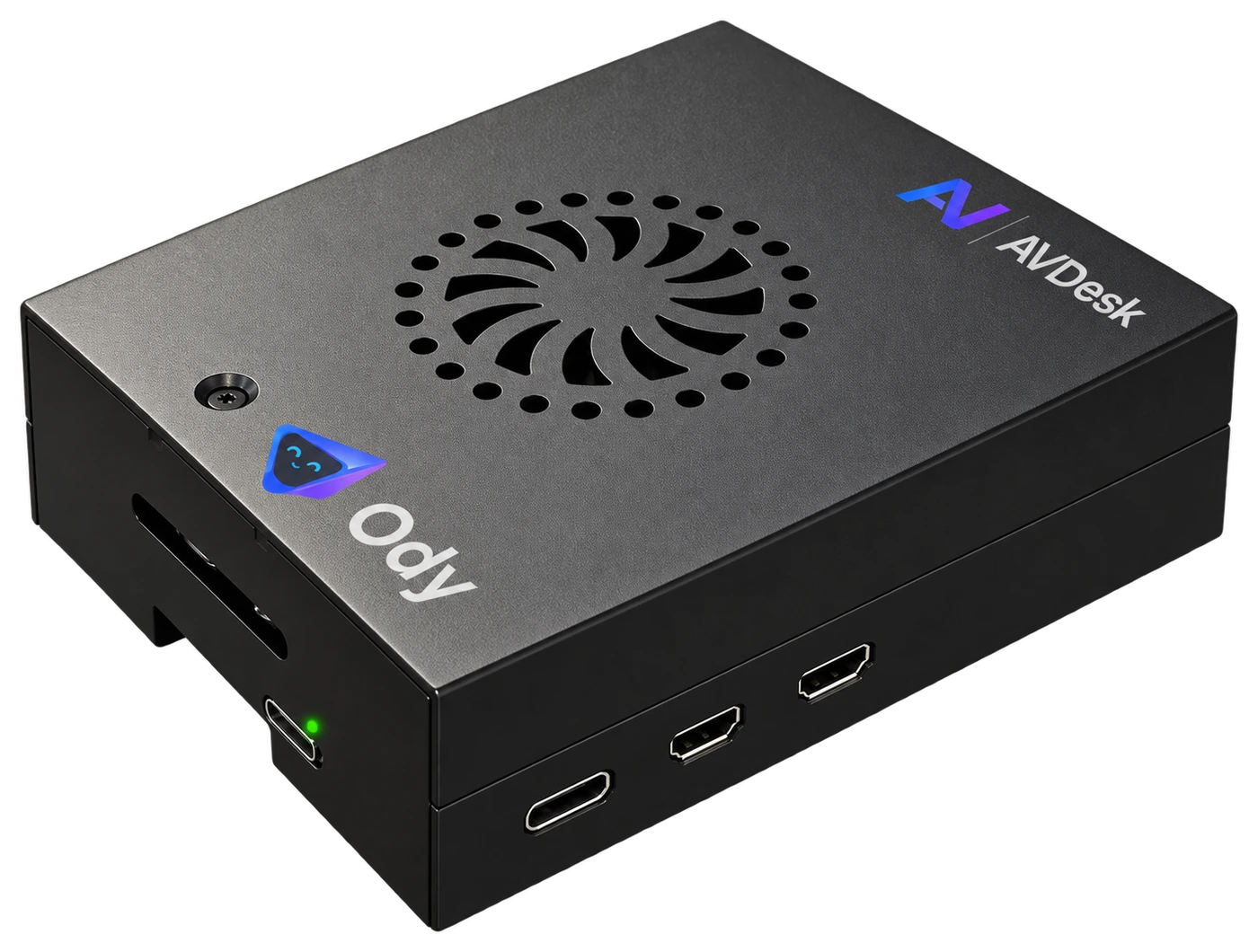
Monitoring shrinks the checklist. When the on-site Ody box checks each AV device's reachability, health and error flags around the clock, the maintenance visit stops being a discovery exercise: fix the known items, do the physical checks no sensor can do, leave. Alert history, the room that keeps flapping, becomes the trigger for an ad-hoc job or the evidence for a rebuild.
What belongs where
| Situation | Record it as | Why |
|---|---|---|
| A device has failed and someone needs it fixed | Ticket | It has an SLA and a requester |
| The steps to fix it: order, book, re-check | Tasks linked to the ticket | They're work, not faults |
| The quarterly room service | Preventative schedule on the room | Recurs, generates a ticket each time |
| The contractor replacing an amplifier | Ad-hoc maintenance job on the asset | Several people, photos, closes against the asset |
| Ordering parts, approving the quote | Administrative maintenance job | It's maintenance work that isn't hands-on |
A maintenance program is a promise to the equipment. Keeping it means tickets, people, photos and a close-out on the asset, not a calendar reminder.
Maintenance works are one module of one platform for AV support teams; tasks are covered in task management for AV teams. Book a demo and bring your maintenance calendar; we'll show you it as a queue with photos.