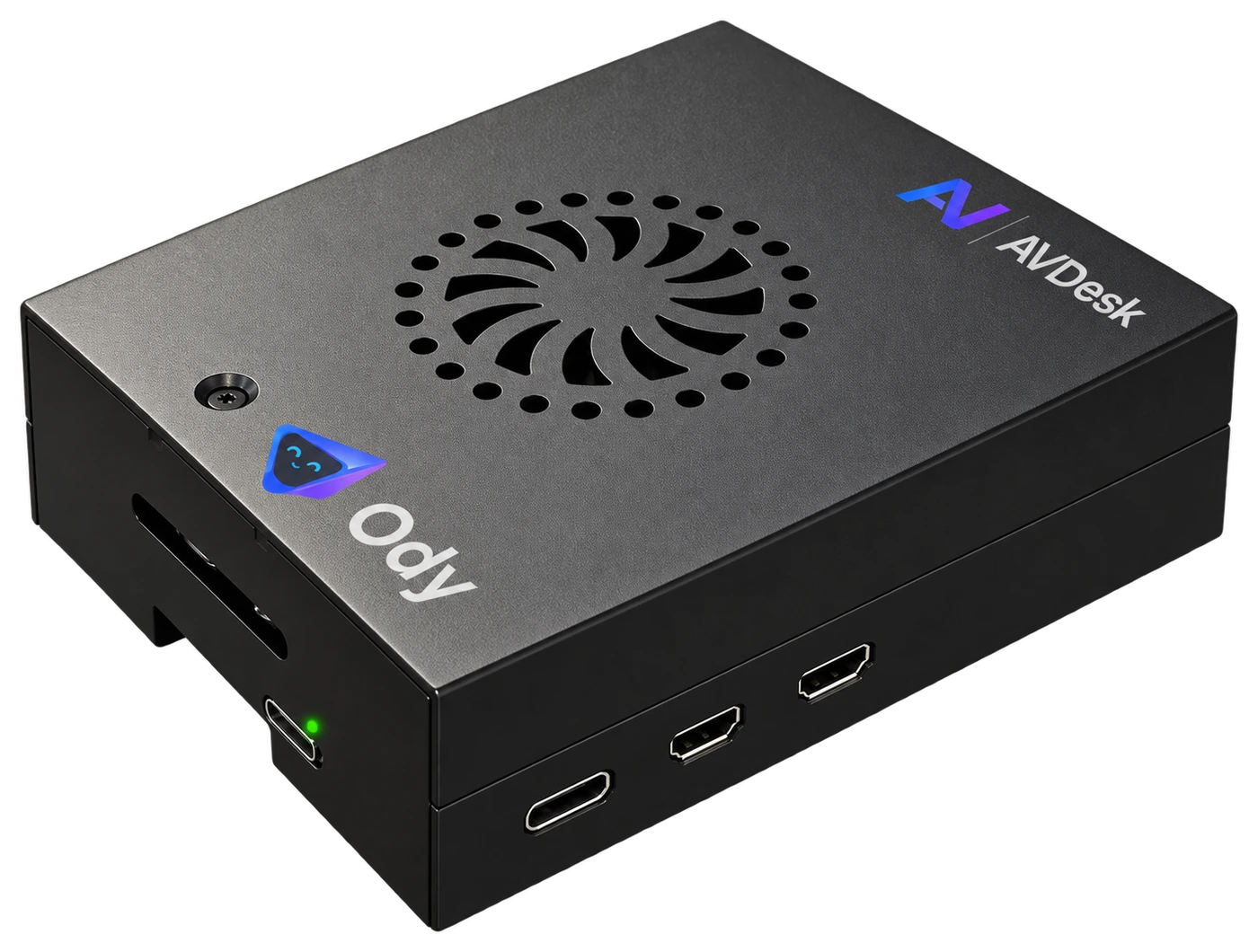

- Structure the estate as campus → building → level → room, with one Ody box per campus network, so every teaching space sits in one register and one alert stream.
- Wakeup checks before the first lecture catch overnight faults in the rooms that must work at 8am.
- Central AV, faculty IT and estates each get scoped access: the campus technician works their campus, the central team sees the whole university.
- Standard room types plus service history per room turn the refresh program into evidence rather than opinion.
Few organisations run more AV than a university. A single campus can have hundreds of centrally bookable teaching spaces (lecture theatres that record and stream, tutorial rooms, hybrid and active-learning spaces, computer labs, library group rooms), plus event and graduation venues, student hubs and digital signage. Most universities then repeat that across several campuses, some of them regional.
The people looking after it are spread out too: a central AV or learning-spaces team, faculty IT, estates and facilities, events staff and integrators under service contracts. This guide covers how to manage AV devices across multiple campuses so every teaching space is known, watched and supported, and so estates teams get the lifecycle data they need.
What a university AV estate looks like
- Lecture theatres: projection or large displays, lectern PCs and inputs, microphones, DSP, cameras and encoders for lecture capture and streaming.
- Teaching and tutorial rooms: a display or projector, room audio, a control panel and increasingly a camera and microphones for hybrid teaching.
- Active-learning and collaboration spaces: multiple displays, table-level sharing and a teacher's control point.
- Libraries and student spaces: bookable group rooms, signage and media equipment.
- Event and ceremony venues: the spaces that host graduations, open days and conferences, where failure is public.
Every one of those rooms runs to a timetable, and the first class of the day starts whether the projector woke up or not.
Who looks after AV on campus
University AV is rarely owned by one team. The central AV or learning-spaces team owns the standard and the teaching rooms. Faculty IT looks after its own specialist spaces. Estates and facilities own the buildings, refurbishments and capital works. Events staff run the venues. Integrators maintain what they installed under warranty and service agreements.
That split is why AV solutions for estates teams matter. Estates need an accurate picture of what is installed in every building, what it cost, how old it is and when it needs replacing. And they need it from the same record the AV team works from, not a separate spreadsheet assembled for each capital works bid.
How to manage AV devices across multiple campuses
- Model the estate the way you talk about it: campus → building → level → room → asset, with every teaching space as a room in one register.
- Put an on-site box on each campus network. In AVDesk that's an Ody per campus, installed by an accredited integrator, managing the AV equipment on that campus and connecting outbound to the platform.
- Federate the vendor clouds you already use (Q-SYS Reflect, Crestron XiO Cloud, Teams Rooms, Zoom Rooms and others) via SSO, so every brand appears in one view.
- Nominate rooms for wakeup checks: lecture theatres, first-period teaching rooms and event venues, checked before the day starts.
- Scope access by campus and role, so the campus technician works their campus, faculty IT sees its spaces and the central team sees the whole university.
- Run one help desk for AV across every campus, with SLA targets that reflect teaching priorities.
- Support remote-first, and send a technician only when the fault is physical. Travel time between campuses makes this matter more than anywhere else.
- Standardise room types, so the service history of one standard tutorial room informs every room built to the same design.
Before the 8am lecture: wakeup checks and remote fixes
Teaching spaces sit idle overnight, so faults that start at midnight are invisible until a lecturer arrives. Wakeup checks catch them first: the projector answers, the displays are reachable, the DSP and control processor are running, the camera is streaming. Failures raise a ticket before the room is needed, and most can be fixed from the service desk (a power-cycle, an input change, a processor reboot) with every command logged. The same approach for schools is in AV management for schools, colleges and TAFE.
Lecturer fault reporting from the lectern
A lecturer with a full theatre has seconds, not minutes. A QR label on the lectern opens a public room page with the room's equipment, quick how-to guides and a one-tap fault report, with no login and no hunting for a phone number. The report becomes a ticket against that room, and the lecturer can follow it on a link. Over a semester those reports show which rooms and which room types are costing the most teaching time.
Estates, capital works and the refresh program
A university refresh program is a capital planning exercise across hundreds of rooms. The register should carry what estates needs to plan it: purchase cost, depreciation and written-down value, warranty expiry, end-of-sale and end-of-support dates per model, and the service history of each room. Forecasts should roll up by financial year, and refurbishments should move assets between rooms without losing their history. Semester breaks are the natural window for scan stocktakes. The method is in AV refresh planning and lifecycle forecasting.
Security review on a university network
University networks are large, segmented and closely watched. The on-site box sits on the AV network or VLAN, connects outbound only over an encrypted tunnel, opens no inbound firewall ports and talks to AV equipment only. Access is role-based and every remote command is audited. The questions your security team will ask are collected in security questions to ask before choosing AV software.
Where universities start
The usual pilot is the lecture theatres on the main campus, or one teaching building: an Ody on that network, the rooms in the register, QR labels on the lecterns, wakeup checks on the theatres and alerts routed to the help desk. After a teaching period there is real data on faults caught early and time saved, and the rollout moves campus by campus. For how the same platform scales across sites, see managing AV across multiple sites and enterprise AV management, or book a demo.