
- Corporate AV fails in the rooms that matter most (the boardroom, the client suite, the town hall), so wakeup checks and live monitoring should start there.
- Central inventory and monitoring across meeting rooms, boardrooms and lobbies gives workplace, IT and facilities one shared picture, with a scoped login for each.
- Make fault reporting a QR scan in the room, and route alerts and reports into one help desk with SLA clocks.
- Standardise room types, measure uptime per room and let the service history drive the next refresh.
A corporate AV estate is easy to underestimate. There are the meeting rooms, often dozens per floor, each with a display, a camera bar, microphones and a Teams or Zoom room system. There is the boardroom, which can't fail. There are client suites, training rooms, a town-hall space for all-hands meetings, collaboration zones, and signage in the lobby and lift wells. In larger organisations all of that repeats across floors, buildings and cities.
It is usually supported by a small workplace technology or IT team who also look after everything else. This guide covers how corporate teams keep that estate working: what to monitor, how to keep one inventory that workplace, IT and facilities all trust, how to make fault reporting effortless, and how to show the workplace experience is improving.
Where AV lives in a corporate workplace
| Space | Typical equipment | What failure costs |
|---|---|---|
| Boardroom and executive suites | Large displays or projection, ceiling microphones, DSP, PTZ cameras, codec, control processor | A board or client meeting starts late in front of the people who approve budgets |
| Meeting rooms | Display, camera bar or codec, Teams or Zoom room system, table connectivity | A hybrid meeting fails for everyone on the call, not just the room |
| Training rooms | Projection or displays, audio, presenter inputs | A room of staff waiting while someone finds IT |
| Town hall and all-hands spaces | Microphones, cameras, encoders, large displays, audio system | The leadership message doesn't reach remote staff |
| Lobbies and wayfinding | Signage displays and media players | The first thing a visitor sees is a blank screen |
Why corporate AV support is harder than it looks
- Rooms are booked back to back. There is no quiet window to discover a fault; the next meeting finds it.
- Hybrid work raised the stakes. A room that can't join the call fails the remote participants as well as the people in it.
- The team is small. Workplace technology is often a few people, sometimes shared with IT, covering several floors or sites.
- Brands are mixed. The room system is one vendor, the display another, the DSP a third. The UC console sees the UC hardware and nothing else.
- Responsibility is shared. Workplace owns the experience, IT owns the network, facilities owns the building and an integrator owns the warranty.
Monitoring meeting rooms, boardrooms and lobbies
Corporate estates need central inventory and monitoring that covers every kind of space, not just the rooms with a cloud-managed room system:
- Boardroom and executive suites: a wakeup check every morning that verifies the displays, cameras, DSP, codec and control processor before the first meeting, with any failure raised as a ticket while there is still time to fix it.
- Meeting rooms: Microsoft Teams Rooms, Zoom Rooms and Webex devices federated in from their own clouds via SSO, and the displays, projectors, DSPs and switches beside them monitored directly by the on-site box. More on that split in AV and UC management.
- Lobbies and signage: displays and players monitored for power and reachability, with content problems reported by staff with a QR scan.
- The network underneath: switch uplinks and PoE budgets, because one failed switch can take a floor of rooms with it.
The mechanics are covered in remote AV monitoring: how to monitor AV devices remotely.
One inventory for workplace, IT and facilities
When workplace, IT and facilities each keep their own list, none of them is right. A single AV asset register organised by site, building, level and room gives everyone the same record, with scoped logins so each team sees and does only what it is responsible for. Every device carries its model, serial, cost, warranty and end-of-support dates, and every ticket and maintenance job lands on its history. When the fit-out team moves a display from level 4 to level 7, the register moves with it.
Fault reporting that takes five seconds
Most people in a corporate office won't raise an IT ticket for a meeting room fault; they will move rooms and complain later. A QR label in each room opens a public room page (what is in the room, how to use it and a one-tap way to report a problem) with no login. The report lands as a ticket against the right room with an SLA clock running, and the person who reported it can follow progress on a link.
Multi-floor and multi-city offices
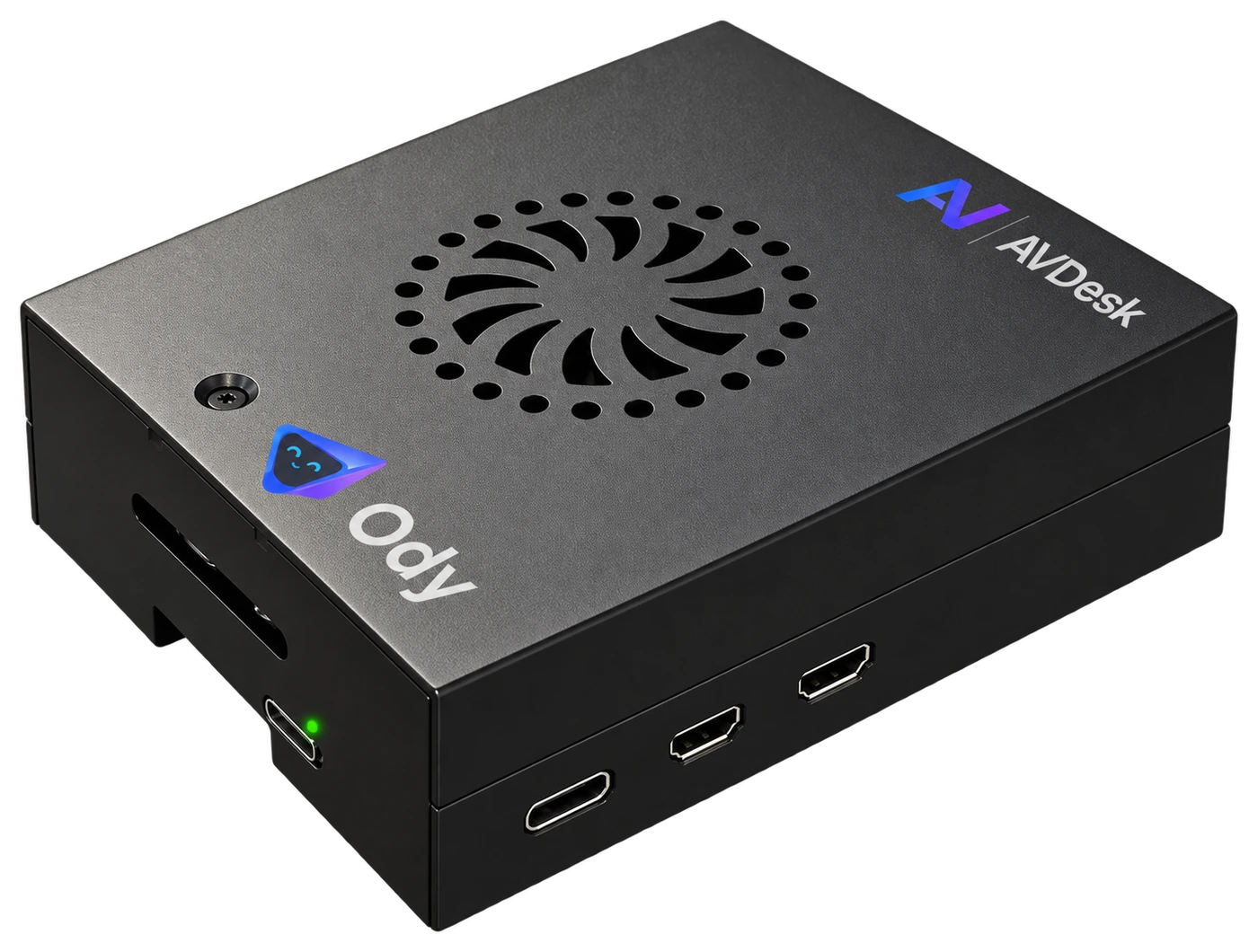
For organisations with several offices, each site gets its own Ody box on its AV network, and every site lands in one platform with one login. Local staff see their office; the central team sees every office, the fleet health and the open tickets across the country. The multi-site playbook is in managing AV across multiple corporate sites, and the platform view in enterprise AV management.
Proving the workplace experience
Workplace teams are increasingly asked to show the office is worth the commute. AV data helps: uptime by room, faults detected before users reported them, time to fix, the rooms that keep failing, and room utilisation. Those numbers turn "the meeting rooms are unreliable" into a list of five rooms with a cause and a plan, and make the case for the next refresh with evidence rather than anecdote.
Where corporate teams start
- Pick the boardroom and the ten most-booked meeting rooms at your main office.
- Have an accredited integrator install Ody on that site's AV network.
- Federate your Teams, Zoom or Webex room clouds via SSO.
- Put QR labels in those rooms and switch on wakeup checks for the boardroom.
- Route alerts and QR reports into the help desk with response targets.
- After a month, review what was caught early and roll out floor by floor.
No AV team? Choose AVDesk Managed Support and our team watches the monitoring and works the tickets for you. See how managed AV services work. AVDesk is priced per room; book a demo on your own floors.