
- In healthcare, AV downtime is a delayed consultation or a cancelled teaching session, so faults have to be found before the room is needed.
- Security review is where AV tools usually die: outbound-only connectivity, nothing installed on devices and audited commands are what get AVDesk through it.
- Clinicians report faults by scanning a QR code on the wall, in seconds, without an account.
- AVDesk manages the AV layer only; clinical and biomedical equipment stays with biomedical engineering and its own systems.
Where AV lives in a hospital
Walk a health service and the AV is everywhere except the ward bay. Telehealth and outpatient consult rooms with a camera, a display and a microphone. Multidisciplinary team rooms where specialists from three hospitals join a case conference. The education centre's lecture theatre and simulation suite, with recording, streaming and control systems worth more than most corporate boardrooms. Executive and board rooms. Digital signage in foyers and waiting areas. In aged care and rehabilitation, activity rooms, chapels and lounges with displays, audio and assistive listening.
This equipment is owned by facilities, IT, the education unit and the executive office in roughly equal parts, installed by different integrators over a decade, and supported by whoever is asked first. That is the estate a health service is trying to run.
AV downtime is a clinical delay
A failed telehealth room isn't an inconvenience; it's a patient in a regional town whose appointment didn't happen, and a specialist whose afternoon just moved. The equipment has to work at the moment it's booked, which means:
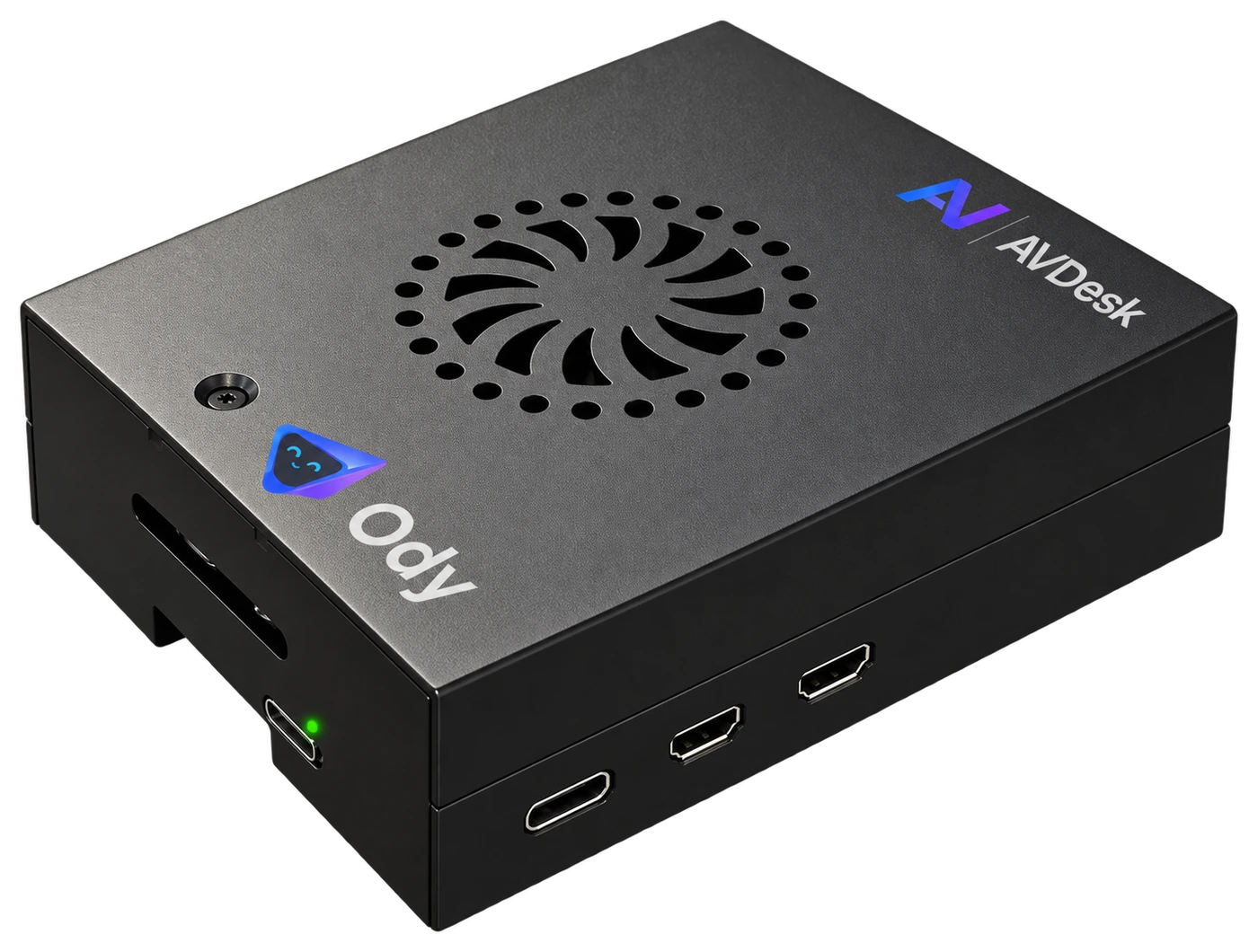
- Wakeup checks on booked rooms. The on-site Ody box verifies telehealth and meeting rooms before the clinic day, and raises a ticket for anything that doesn't respond.
- Remote fixes without a walk across campus. Power, input, preset recall and a hard reboot of a locked-up processor, issued from the AV or IT desk over the device's own protocol, so the 9am consult isn't waiting on a technician crossing three buildings.
- Priority that reflects clinical impact. The support desk runs SLA policies with response and resolution clocks per priority; a telehealth room outage and a foyer display are not the same ticket and shouldn't have the same clock.
Getting through security review
Health networks are, rightly, the hardest networks to add anything to. Most AV monitoring tools fail here rather than on features. AVDesk was designed to pass:
| What the security team asks | How AVDesk answers |
|---|---|
| What ports do we open inbound? | None. Ody connects outbound only, over an encrypted tunnel. No inbound rules, no VPN, no device exposed to the internet. |
| What gets installed on the equipment? | Nothing. Ody speaks to devices over their existing control protocols: PJLink, Q-SYS QRC, Crestron, AMX NetLinx, ONVIF, SSH, SNMP, HTTP APIs. |
| Who can control what, and is it logged? | Role-based, per-site permissions down to individual actions, and every remote command recorded with who, what and when. |
| Where is the data? | AVDesk is built in Sydney and hosted in Australia. |
| How do our existing vendor clouds fit? | Microsoft Teams Rooms, Webex Control Hub, Zoom Rooms, Crestron XiO Cloud, Q-SYS Reflect and others federate in via SSO (SAML/OIDC); nothing is replaced. |
Fault reporting that fits a clinician's day
A clinician who finds the telehealth camera dead has about five seconds to report it before moving on. A QR code on the wall gives them a fault form for that exact room: scan, type "camera not detected", submit. The ticket arrives with the room and its equipment attached, and they get a link if they ever want to check on it. The same code works for the education coordinator in the theatre and the volunteer in the aged-care lounge.
Multi-campus health services
A local health district or a private hospital group is a multi-site estate by definition. AVDesk gives each campus its own Ody, one register structured by campus, building, level and room, permissions scoped so campus staff work their campus while the central AV or IT function sees the whole service, and one support queue with SLA reporting across all of it. Equipment moving between campuses, common in education units, is a QR scan-and-move rather than a lost record.
The register finance and biomed will both accept
The AVDesk register holds cost, straight-line depreciation, written-down value, warranty and supplier on every AV asset, with a field-level audit trail and end-of-support dates per model driving a refresh forecast by financial year. It makes the AV fleet a documented, valued, planned part of the capital program instead of a surprise. And it stays in its lane:
The telehealth room is verified before the clinic opens, the fault is fixed from the desk, the command is logged, and the security team never opened a port. That is AV management built for health.
Where health services start
Usually with the rooms clinicians depend on: the telehealth suite and the education theatre. An Ody on that campus, the equipment list imported, QR codes on the walls, and the support desk live under SLA. Additional campuses follow. Services without a dedicated AV team can choose AVDesk Managed Support, where our team watches the monitoring and works the tickets on their behalf. Book a demo and bring your security questionnaire; we like those.