
- A register stays accurate only when updating it is easier than not updating it. Structure, QR labels and discovery do that.
- Structure by site → building → room → asset; the room is the unit faults, dispatch and AVDesk pricing all use.
- Record cost, depreciation, warranty and supplier. That's what turns an IT list into a finance document.
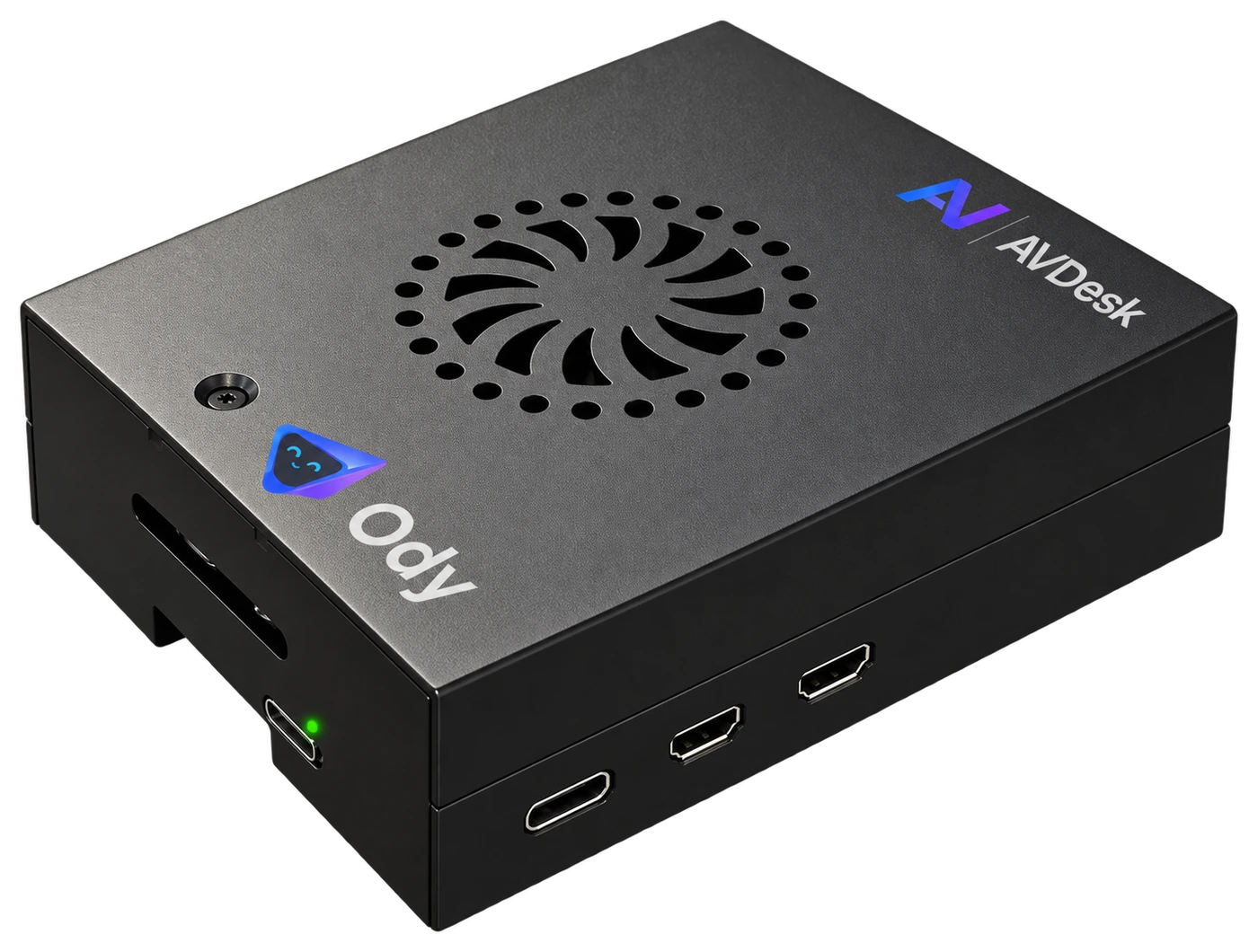
- Let the on-site Ody box, which reaches and manages the AV equipment on the site network, queue AV devices for a human to approve; audit with scan-based stocktakes.
Ask an AV team for their asset register and you'll usually get a spreadsheet, last touched eight months ago, with a tab per building and a colour code nobody remembers. It was accurate the week it was made. It has drifted every week since.
The problem isn't effort. It's that a register only stays accurate if updating it is easier than not updating it. This guide covers both parts: what a good AV asset register contains, and the workflow habits that keep it true.
Step 1 Decide the structure before the data
AV assets live somewhere, and "where" is the field everyone searches by. Structure the register as a hierarchy that matches how your organisation actually talks about space:
- Site: the campus, venue or office.
- Building and level: where the estate is large enough to need it.
- Room or location: the boardroom, theatre, teaching space or rack room.
- Asset: the individual device.
Room-level structure matters more than it looks: it's the unit people report faults against ("Boardroom 2 is down"), the unit technicians are dispatched to, and in AVDesk it's also the unit the platform is priced by.
Step 2 Record the fields that earn their keep
| Field | Why it matters |
|---|---|
| Asset tag (unique) | The one identifier everything else hangs off: tickets, labels, audits, history. |
| Manufacturer & model | Drives spares, firmware planning and end-of-life tracking across the fleet. |
| Serial number | Warranty claims and insurance. Record it at install, not at failure. |
| Location (site → room) | The field every fault report and dispatch starts from. |
| Status | In service, in repair, in storage, retired. Reporting is meaningless without it. |
| Purchase date & cost | Feeds depreciation and written-down value, and turns refresh conversations into numbers. |
| Warranty expiry | Out-of-warranty repairs are a budget decision; know before, not after. |
| Supplier / integrator | Who to call, and who quoted what, per asset. |
A register that carries cost, straight-line depreciation and written-down value stops being an IT list and becomes a finance document, one that answers "what is the estate worth" and "what falls off the books next year" without a separate spreadsheet.
Step 3 Label everything with QR codes
The single highest-leverage habit: every asset gets a durable QR label that opens its record when scanned. The moment a technician can stand in front of a rack, scan a sticker and see the asset's details, history and open tickets, updating the register stops being a desk job. Stocktakes drop from days to hours. We've written a full guide on QR labelling an AV estate.
Step 4 Let discovery do the finding, and you do the approving
Manual entry is where registers go to die. If your platform has on-site monitoring, use its discovery: in AVDesk, the on-site Ody box reaches and manages the AV equipment on the site network, and places the AV devices it finds in a validation queue for a human to approve into the register. Ody talks to AV equipment only. It isn't a general-purpose network scanner, so the queue holds AV devices, not the rest of the network. That balance matters: automatic discovery keeps the register complete, human approval keeps it clean. Nothing lands in the register that a person hasn't confirmed, and the AV equipment Ody reaches doesn't wait for someone to type it in.
Step 5 Track the consumables too
Lamps, filters, batteries for wireless microphones, spare cables and loan kit are where AV budgets quietly leak. Tracking consumables and spares alongside the assets they serve means the register can answer "do we have a spare lamp for the theatre projector" before the event, not during it.
Step 6 Make audits routine, not heroic
Schedule stocktakes and treat the results as data: what was confirmed in place, what's missing, what moved. An audit trail on every change (who edited what, when) is what lets you trust the register in three years, because you can see exactly how it got to its current state.
The test of a good register
It's not "is everything in it". It's: can anyone in the team, standing anywhere in the estate, pull up the truth about the device in front of them in ten seconds, and correct it in twenty? If yes, the register will stay accurate on its own. If no, drift is already underway.
AVDesk's asset management was built around that test: hierarchy by site and room, discovery with a validation queue, QR labels, stocktakes, consumables, depreciation and a full audit trail. Book a demo and bring your current spreadsheet. It makes a good before-and-after.